


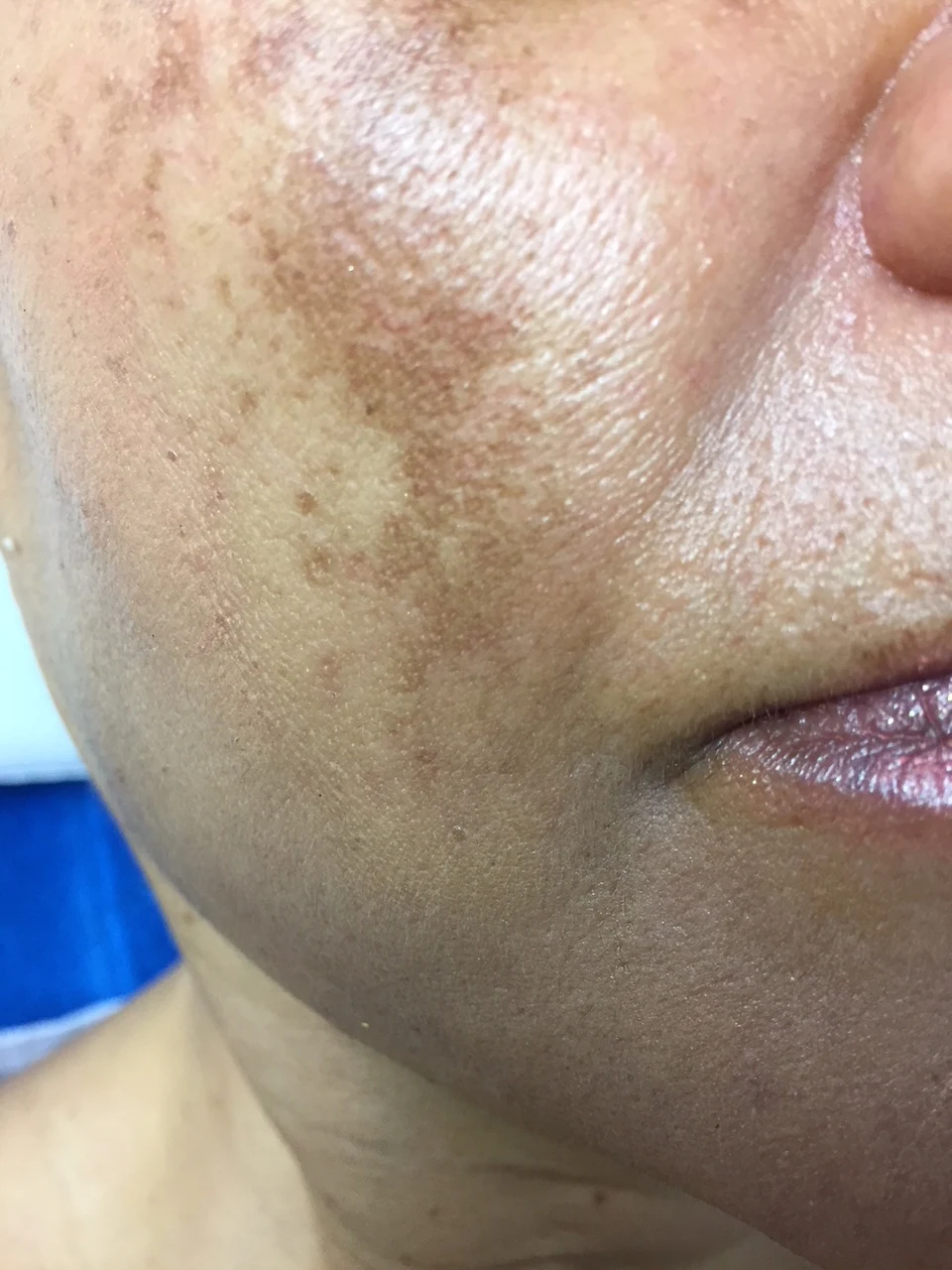
At our CQC-registered dermatology clinic, our consultant dermatologist-led team assesses melasma carefully before recommending a plan, since some approaches suitable for other pigmentation can make melasma worse. We welcome patients from across Kent, including Canterbury, Whitstable, Herne Bay, Faversham, Ashford, Maidstone and Folkestone.
About the Condition
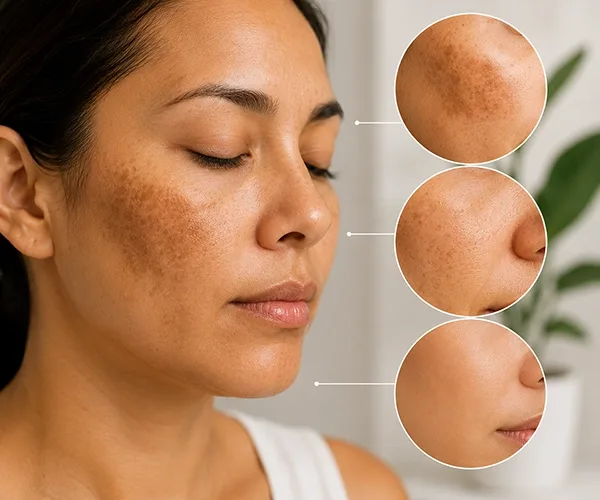
Melasma causes patches of darker pigmentation, usually on the cheeks, forehead, nose and upper lip. It is more common in women, particularly during pregnancy or while taking hormonal contraception.
Common features include:
- Symmetrical brown or greyish-brown patches, often on both cheeks
- Patches on the forehead, nose, upper lip and cheeks
- Patches that darken further with sun exposure
- Gradual onset, often during pregnancy or with hormonal contraception
- Patches that can fade and return over time
Unlike straightforward sun damage, melasma is driven by a combination of hormonal factors, sun exposure and, for some people, genetics. Sunlight is one of the strongest triggers for it to darken, which is why sun protection is so important. This mix of causes makes melasma more complex to treat and prone to returning.
Melasma can look similar to other kinds of pigmentation, such as age spots or post-inflammatory marks, so an accurate diagnosis matters before any treatment starts. You may find our pages on hyperpigmentation and age spots helpful. Any dark mark that is new, changing, irregular or asymmetrical should be checked by a clinician, as it may need a different kind of assessment.
How We Treat It
Melasma treatment focuses on a careful, layered approach rather than a single quick fix. Your first step is a dermatology consultation, where we review your history, including pregnancy, medication and previous treatments, and discuss what is realistic. This is essential before any melasma treatment begins.
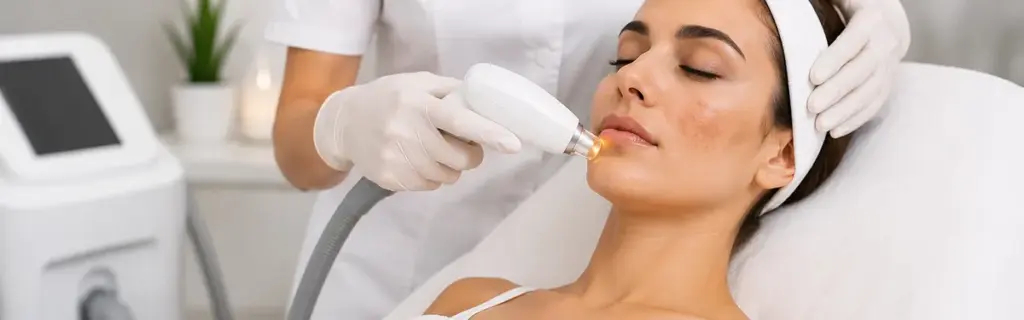
The foundation is strict daily sun protection and appropriate prescriptive skincare to help fade pigmentation gently. For some patients, carefully selected laser or IPL treatment can also play a role, delivered under the oversight of Dr Mark Hudson-Peacock, Consultant Dermatologist and the clinic’s Laser Protection Supervisor. It is used cautiously, following a consultation and patch test, because overly aggressive treatment can sometimes worsen melasma. Medical skin peels may also be considered as part of a wider plan.
Individual results vary, and melasma can return, particularly with sun exposure or hormonal change, so ongoing care is part of the plan.
When to See a Specialist
Because melasma behaves differently from typical sun damage and can be worsened by the wrong treatment, it is worth having it assessed by our team before starting any treatment, including over-the-counter products or treatments designed for general pigmentation.
Book a consultation if you have symmetrical facial patches, if pigmentation has appeared during pregnancy or after starting hormonal contraception, or if it is spreading or affecting your confidence.
Please seek prompt medical advice if a patch is only on one side, has an irregular edge, is raised, itchy or bleeding, or changes quickly. If you are pregnant or breastfeeding, tell us before any treatment.
Further reading: DermNet – Melasma · British Association of Dermatologists
Frequently Asked Questions
Is melasma the same as other pigmentation or age spots?
No. Melasma is driven by hormonal factors as well as sun exposure and behaves differently to typical sun spots, which is why it needs a more careful approach.
Can laser treatment make melasma worse?
It can if used inappropriately, since some laser and light-based treatments can trigger more pigmentation in melasma-prone skin. That is why we use carefully selected laser or IPL only after a proper assessment of your skin.
Will melasma go away on its own?
Melasma can fade over time, particularly if it was triggered by pregnancy or hormonal contraception, but it often persists or returns without appropriate management, including strict sun protection.
What is the most important step in managing melasma?
Consistent, high-factor sun protection is essential, since ultraviolet light is one of the strongest triggers for melasma to darken or return.
Can melasma be treated during pregnancy?
Some treatments are not suitable during pregnancy or breastfeeding. Your team will advise on suitable options for your circumstances at your consultation.
Do I need a GP referral?
No. You can book directly with us.
Get your concern assessed
First step
Specialty Doctor £250, Consultant Dermatologist £300
Appointment
30 minutes
Availability
Usually within 1 to 2 weeks
Treatments for melasma

Related conditions
Posted on Google
 David Manyweathers
Trustindex verifies that the original source of the review is Google.
I would like to say that every aspect of my operation and after treatment was absolutely first class, would definitely recommend The Skin and Laser.Posted on Google Toby LambI had my skin tag removal done by Amber and I honestly couldn’t be happier with the experience. Amber was so lovely, professional and reassuring throughout the whole process, making me feel completely comfortable and at ease. She took the time to explain everything and made the treatment feel quick and straightforward. I’m so pleased with the service I received and would highly recommend Amber to anyone considering skin tag removal.Posted on Google
 brooke etheridgeI had a cyst removed from my cheek, dr mark was so confident and reassuring, the procedure was clearly explained and efficiently carried out I was back to normal duties within an hour! Thank you!Posted on Google
 Pam FrostExcellent experience in every way. So glad I found this place. The treatment by Charlotte was exceptional. Update. Second visit was just as good as the first.